When the Queen Bees Took Flight: Preserving the Legacy of Girls’ Athletics in Bath
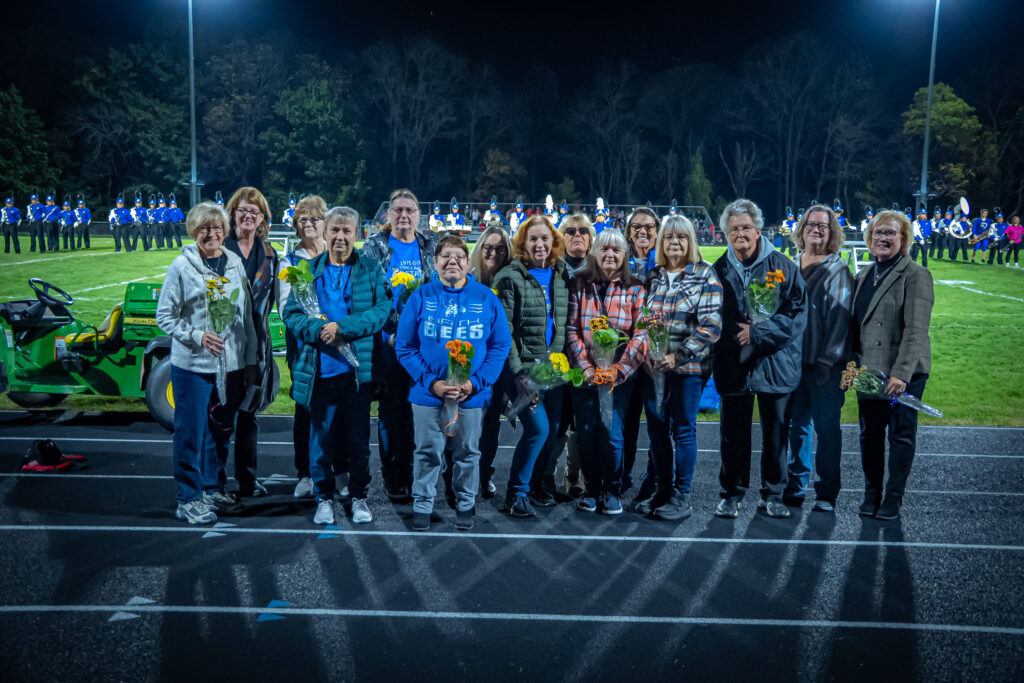
On October 10, during a high school football game, Bath Community Schools attempted to do something meaningful: honor the 1975 Bath Girls’ Track team on the 50th anniversary of their state championship.
Thanks to the athletic director, who has a long-standing rapport with the former coach, a tribute was thoughtfully planned. Around 15 women who were part of that historic team stood on the field together. It should have been a more powerful moment.
But technology had other plans.
As one former team member, Cindy Tarrant began to speak, the audio failed. Multiple attempts were made to correct and it continued when Coach Nancy Roberson stepped forward to speak. Standing on the field, I could see the words being spoken. I could feel the weight of the moment. But most of the crowd couldn’t hear a thing.
Technology failed, but that doesn’t mean the story should.
How It All Began
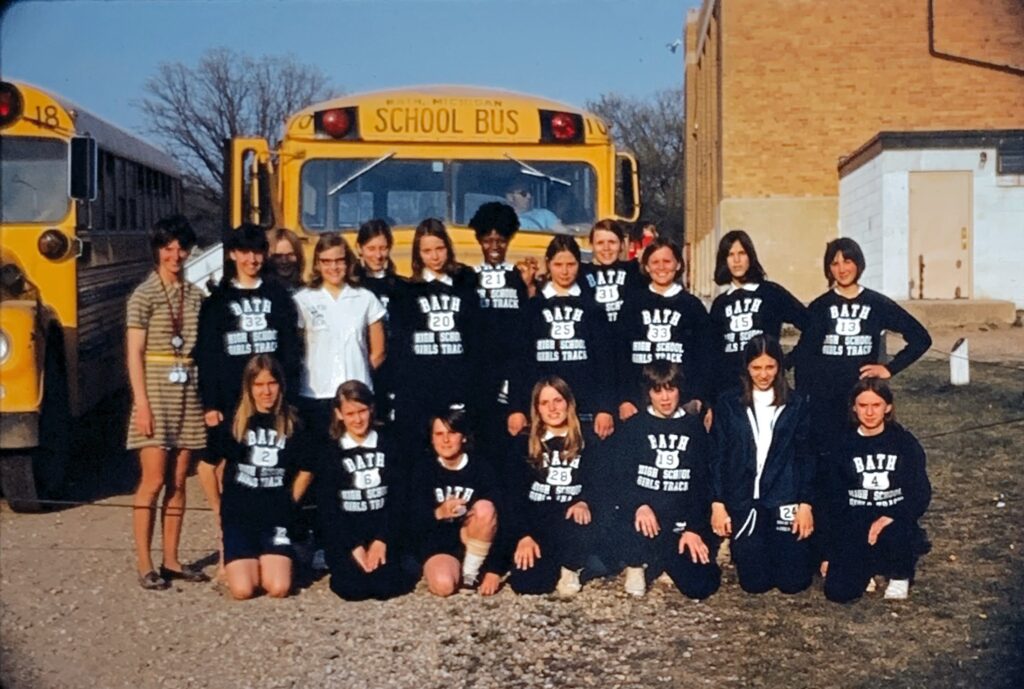
In 1971, Nancy, was teaching and coaching JV basketball at Bath, she was given the directive to “start a track program.” With uniforms provided by the student council; her first team had just 14 girls.
At the time, girls’ athletics in Bath looked very different than they do today. The boys already had track and basketball. Girls had basketball and that was largely thanks to Alice Selfridge, who started the program in the early 1960s. Alice had a reputation for grit, determination, and the belief that hard work pays off. The trophy cases at Bath Community Schools still reflect her leadership.
Beyond that, opportunities for girls were limited.
One of the biggest hurdles in building girls’ sports wasn’t equipment or facilities, it was convincing parents, especially moms, that this was a worthwhile pursuit for their daughters. Many women of that generation had never participated in sports themselves. For them, the idea of girls competing simply wasn’t familiar.
This was the era when Title IX was just coming into existence. It was also a time when women:
- couldn’t have a credit card without a male co-signer
- often couldn’t open a checking account independently
- faced barriers to home ownership
- could legally lose their jobs if they became pregnant
Girls’ sports weren’t just underfunded, they were misunderstood.
Building Something From Nothing
Before official teams existed, girls participated through the Girls Athletic Association (GAA). They were allowed three “play days” per year (field trips by bus to compete with other schools). There were intramural activities, but gym time was scarce and often limited to once a week.
Fast forward to today: Bath’s recent Winter Homecoming was celebrated on a Friday night with girls’ basketball as the featured event. That would have been unthinkable 50, or even 25 years ago.
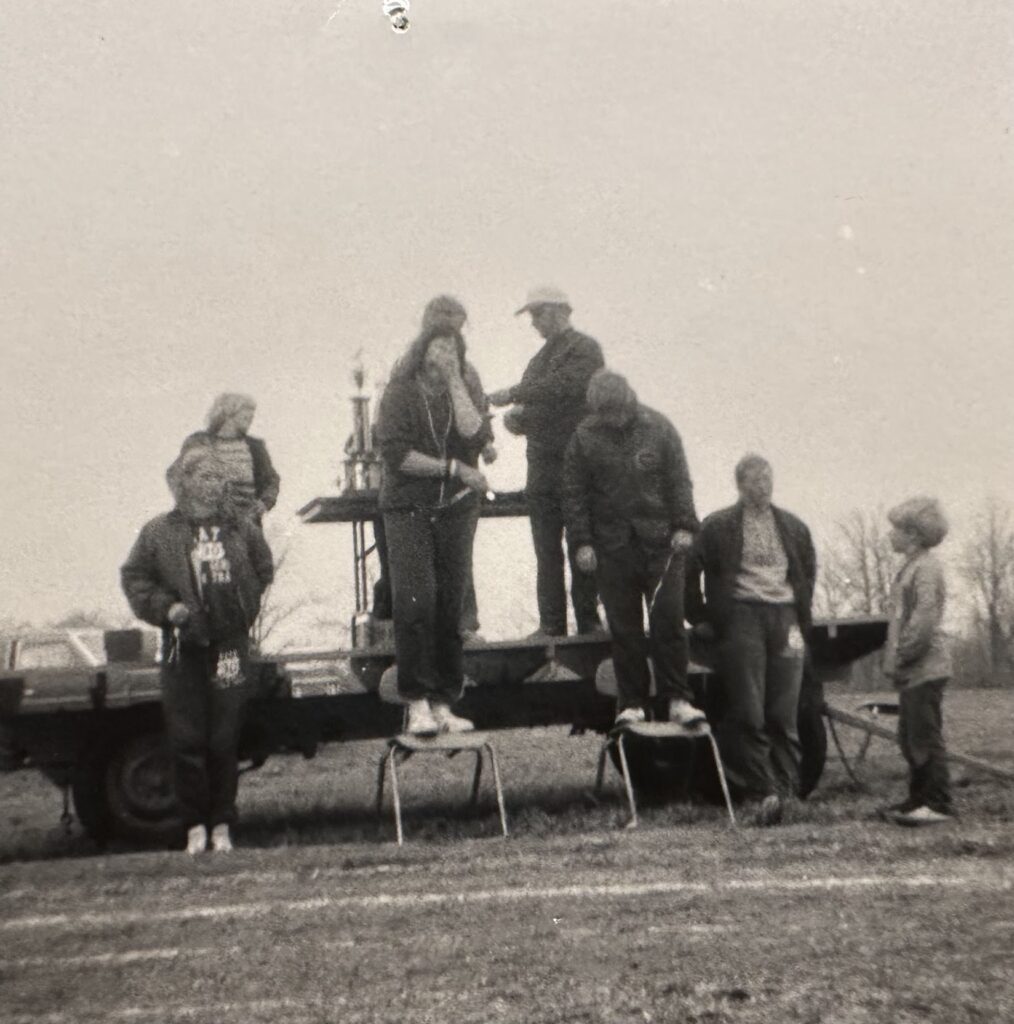
Progress didn’t happen by accident.
Coach Roberson shared stories of constant obstacles: construction that tore up the track, split school schedules while a new high school was being built, and practice times that stretched late into the evening. While the current high school was being built, she taught full days, coached afterward, and — during one championship season — carried a newborn in a front-pack carrier while loading buses and searching for places to practice.
They practiced wherever they could:
- Unused gyms
- Borrowed tracks and track time from nearby school districts
- Michigan State University
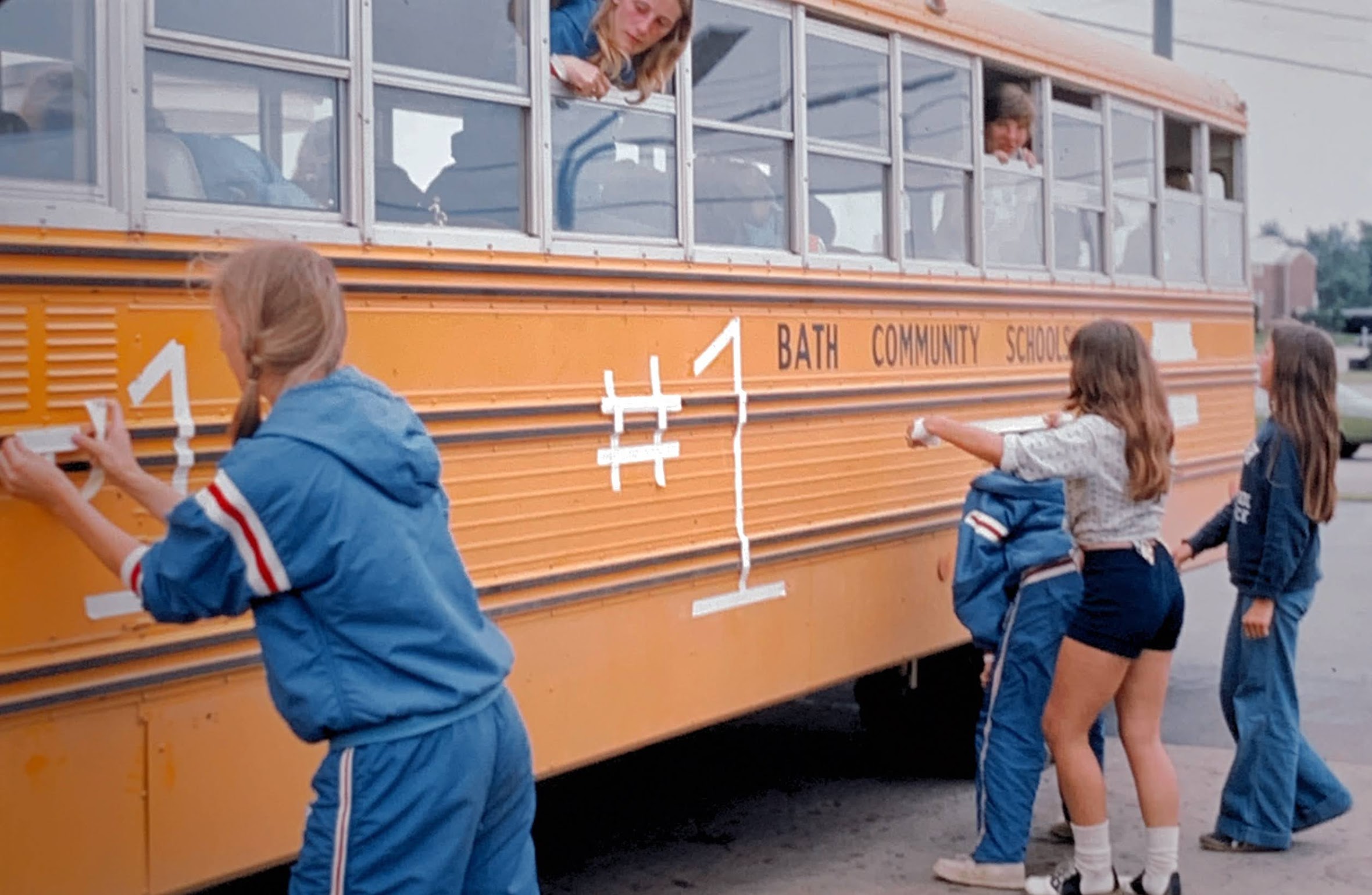
At 4:30pm in the afternoon, when students were released, the buses loaded and some days did not know where they’d land. And they made it work.
Not because it was easy, but because obstacles were meant to be worked around.
Amy Schaibly Sweet shares about when Coach Roberson led Bath Girls’ Track: In retrospect, being part of Bath athletics — and specifically the track team coached by Nancy Robertson in the mid-to-late 1970s — was an empowering experience for that era. What she accomplished was truly phenomenal.
More from Amy Schaibly Sweet here
She guided us into the events that allowed our natural talents to shine and created an environment where we felt confident in our performances. I never felt shamed for a bad race — only encouraged to improve the next time. Her commitment to us matched the commitment she asked from us.
She built confidence without yelling or intimidation. She led by example — always finding places for us to train, always there when we needed her. I still remember working to three-step the hurdles. To improve my time for regionals, that was the goal. She simply said, “Amy, I know you have this in you. I’ve seen how you push yourself. Set your mind and do it.”And I did. I’ve carried that motivation into my career and my life ever since.
We ran the halls when it snowed in April. We ran on the roads during split schedules. Track may have been an individual sport, but she built a team that worked for each other and believed in each other. It gave us confidence, work ethic, and lessons that lasted far beyond high school.
The Culture She Built
What struck me most wasn’t just the logistics, it was the intentional culture.
Coach Roberson talked about pride. About wearing a Bath uniform. About creating space for every girl. Track mattered because no one had to sit on the bench, there was always a place for you.
She created locker room posters. And the top finish wasn’t the only thing shared, she celebrated top-10 finishes proving progress mattered, and reminded her athletes constantly that they belonged.
The first year of Bath Girls Track (1971), people thought the name on their uniform was an acronym and asked what “BATH” stood for, the team had an answer:
Better Athletes Try Harder.
The Win, and the Quiet After
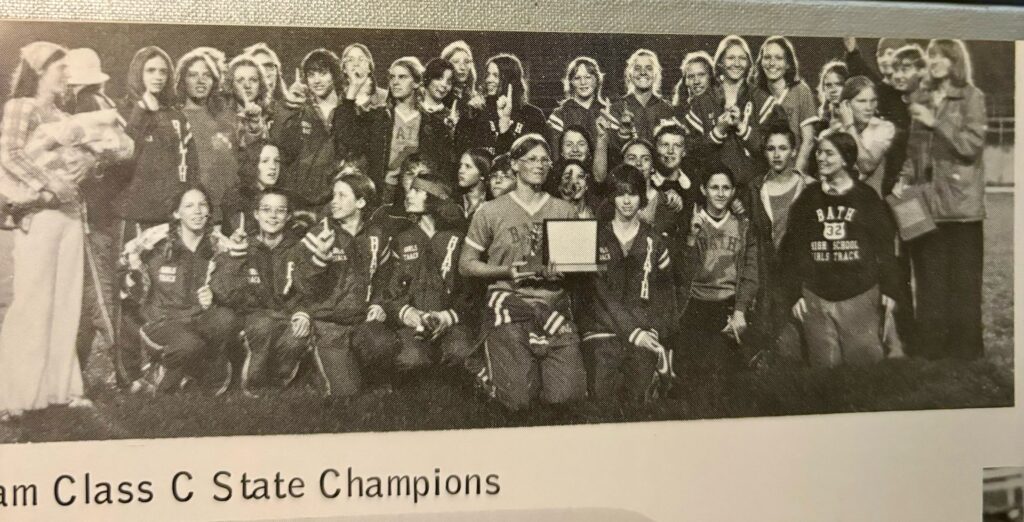
In 1975, the Bath girls’ track team won the state championship.When they returned home, there was no parade. No police escort. No citywide celebration. It felt more like returning from a regular season meet than Bath’s first-ever Bath Girls’ Track State Championship.
That same year, the boys’ team, who were favored to win, placed lower than expected, and their result overshadowed the girls’ victory.
That contrast matters.
It helps explain why, 50 years later, it still feels important to tell this story fully.
The Queen Bees Return
At the football game that night, I noticed something else: a young girl wearing a Queen Bees shirt. The young girl just happened to be Coach Roberson’s granddaughter and she was wearing her grandma’s vintage 1960’s Queen Bee shirt.
The Queen Bees identity began with Alice Selfridge’s basketball program in the 1960s and later carried into track. Yet over time, through coaching changes and leadership transitions, the name faded.
Until now.
That shirt sparked a bigger idea: not about merchandise, but about meaning. There was nothing online explaining where the Queen Bees came from or what they stood for. And that felt like something worth preserving.
It’s not about the shirt. It’s about the story behind it. Although it is a pretty cool shirt. 
A Conversation Across Generations about 50 years of girls playing sports
As part of this effort, Coach Roberson generously shared her time with some much younger up and coming student-athletes. It was entertaining. It was meaningful. And it was proof of her belief that athletics build confidence.
To understand what this legacy really means, we didn’t just look back, we put it in front of the next generation.
It was National Girls & Women in Sports Day when they sat down for a chat with Coach Nancy Roberson and asked their own questions, unscripted, curious, and completely unfiltered.
What followed wasn’t an interview. It was a passing of the torch.
When asked what girls gain from sports, her answer was simple:
Confidence. Confidence to speak. Confidence to try. Confidence to talk to a stranger on a video call at 10 years old. And with said confidence, you learn to lead.
They asked what it was like to start a team when girls didn’t think they were supposed to compete.
She told them her first track team in 1971 had 14 girls and that she built the program by teaching and coaching younger students first, so by the time they reached high school, they not only knew their coach, they already believed they belonged.
They asked if girls believed they could be good.
She told them she had to convince them at first, and as they saw themselves improve, everything changed.
They asked what sports give girls.
Her answer was immediate: Confidence and the ability to lead.
Then she pointed at them, sitting in front of the computer asking questions of a woman they had never met. Sports helped with this.
They also talked about:
- How teams are built through shared wins and losses
- The goals weren’t hidden — they were displayed. On index cards. In lockers. on bedroom walls. Because once you say it out loud and let others in on it, the energy shifts. Support shows up. Expectations rise. Priorities realign.The dream stops being private and starts becoming real.
- In this sport, success wasn’t saved for the final game. Every weekend offered a fresh start line and the possibility of a medal. Progress had something you could hold in your hand. It’s so different from basketball, where the rewards wait quietly until the very end. Here, growth was visible all season long.
- How they were once described as too emotional and too fragile for competition. Instead of standing still and debating it, they stepped onto fields, into gyms, onto tracks and proved their capability in real time. Not by arguing for a place, but by earning it.
And the girls listened, not as history, but as something that belonged to them.
Because it does.
What Has Changed, and What Hasn’t
The girls were stunned to hear what we already touched upon:
- women once couldn’t have credit cards
- women could lose their jobs because they were pregnant
- girls had limited events because people thought they “couldn’t handle it”
And yet the core of the experience sounded familiar. Why do you play? Nancy asked them.
“Because it’s fun.”
“Because of my teammates… my friends.”
“Because when you win, everyone cheers.”
Fifty years apart, the same answers.
The Moment It All Connected
When asked what she hopes girls today understand about the athletes who came before them, Nancy didn’t talk about records or championships.
She talked about empowerment. About being told girls shouldn’t compete, and doing it anyway. About proving it, one practice, one meet, one season at a time.
And sitting there in Queen Bee shirts, these two 10-year-olds became the living proof that they had.
If interested in hearing more, visit YouTube HERE.
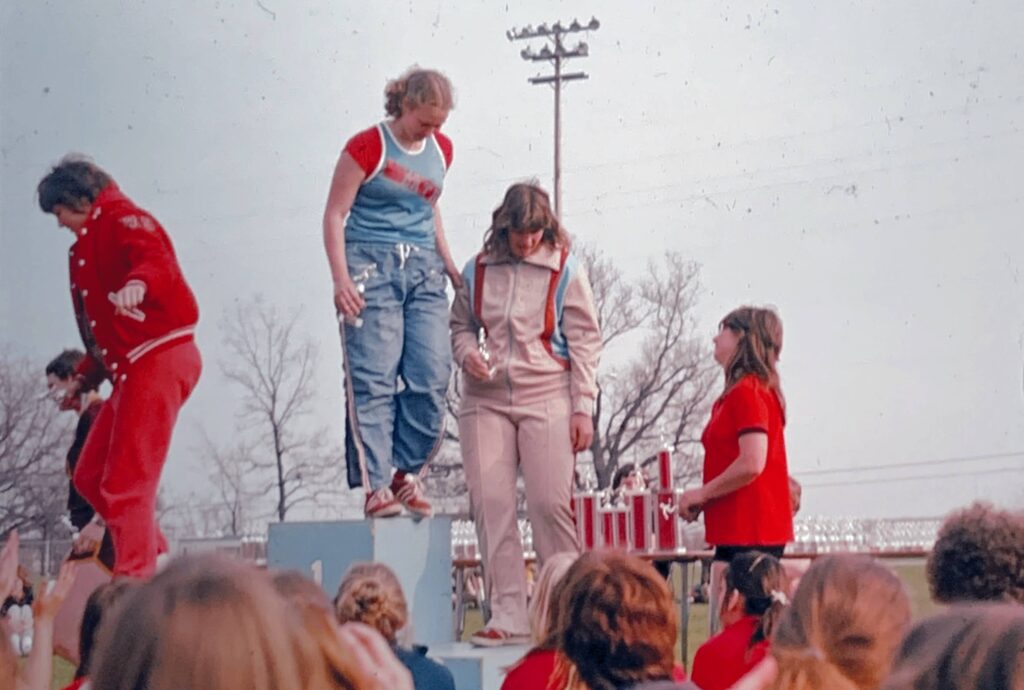
Another member from Coach Roberson’s Bath Girls’s Track team shared:
Dawn Cooley shares a few words about Nancy Roberson’s impact both as a coach and years later.
It’s not often you are given the opportunity to write about a legendary Coach like Nancy Roberson.The historical significance of Coach Roberson’s immediate and lasting impact on Bath Girls sports and the individuals she coached cannot be overstated. Coach Roberson prepared herself to coach Bath girls track by reading books and watching Olympic films. Coach Roberson made the impossible, possible. To read more from Dawn, click below.
More from Dawn Cooley here
Why This Matters Now
Coach Roberson no longer lives in the area, but she keeps up with Bath athletics. She’s proud of what she helped build, and she’s proud of the girls still wearing Bath uniforms today.
The women of the 1960s and 1970s didn’t just create teams, they created pathways. They became fierce athletes, fierce leaders, and fierce community members. Maybe that’s why Bath continues to produce determined girls who play hard, lead boldly, and carry that same pride forward.
This story isn’t about the past for nostalgia’s sake, it’s about understanding how we got here and honoring the women who made it possible.
To every woman who competed when it wasn’t celebrated, supported, or even fully understood: thank you. Because of you, girls today can run, jump, lead, coach, speak, and believe.
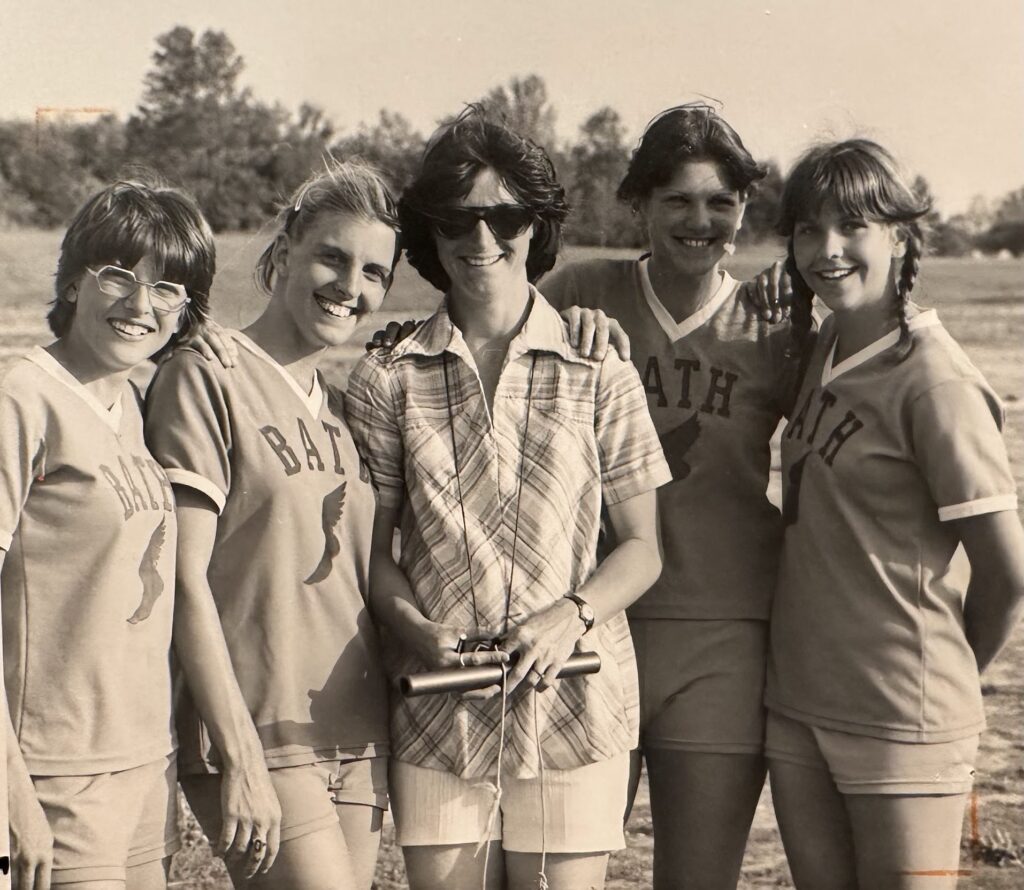
And to honor Nancy Roberson, Alice Selfridge and to honor all female athletes (past and present) at Bath Community Schools, the Queen Bees will take the court – a modern day reproduction created from a photo of the original will be worn by today’s athletes and by a community that now knows the story behind the name.
As this effort continues beyond this space, with proceeds supporting youth sports opportunities for Bath Community Schools students, the path you built keeps moving forward for the girls who are just beginning.
She started on a basketball court, moved to the track and fifty years later two young student-athletes sat across from her asking about the game they love, the clearest proof that the legacy never stopped. It just kept moving.
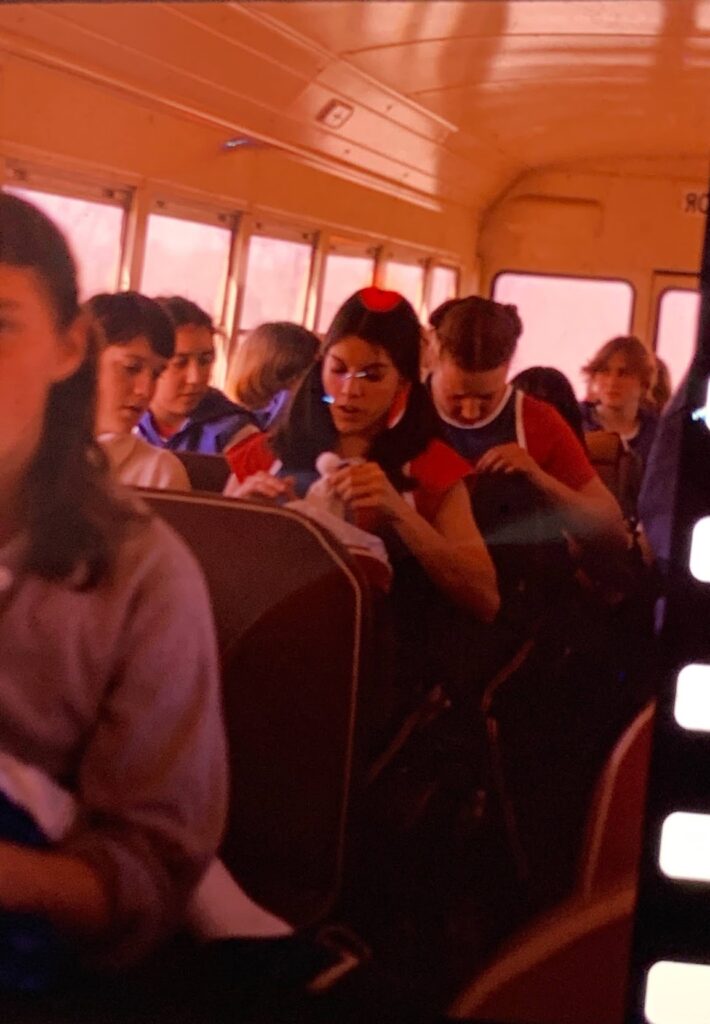
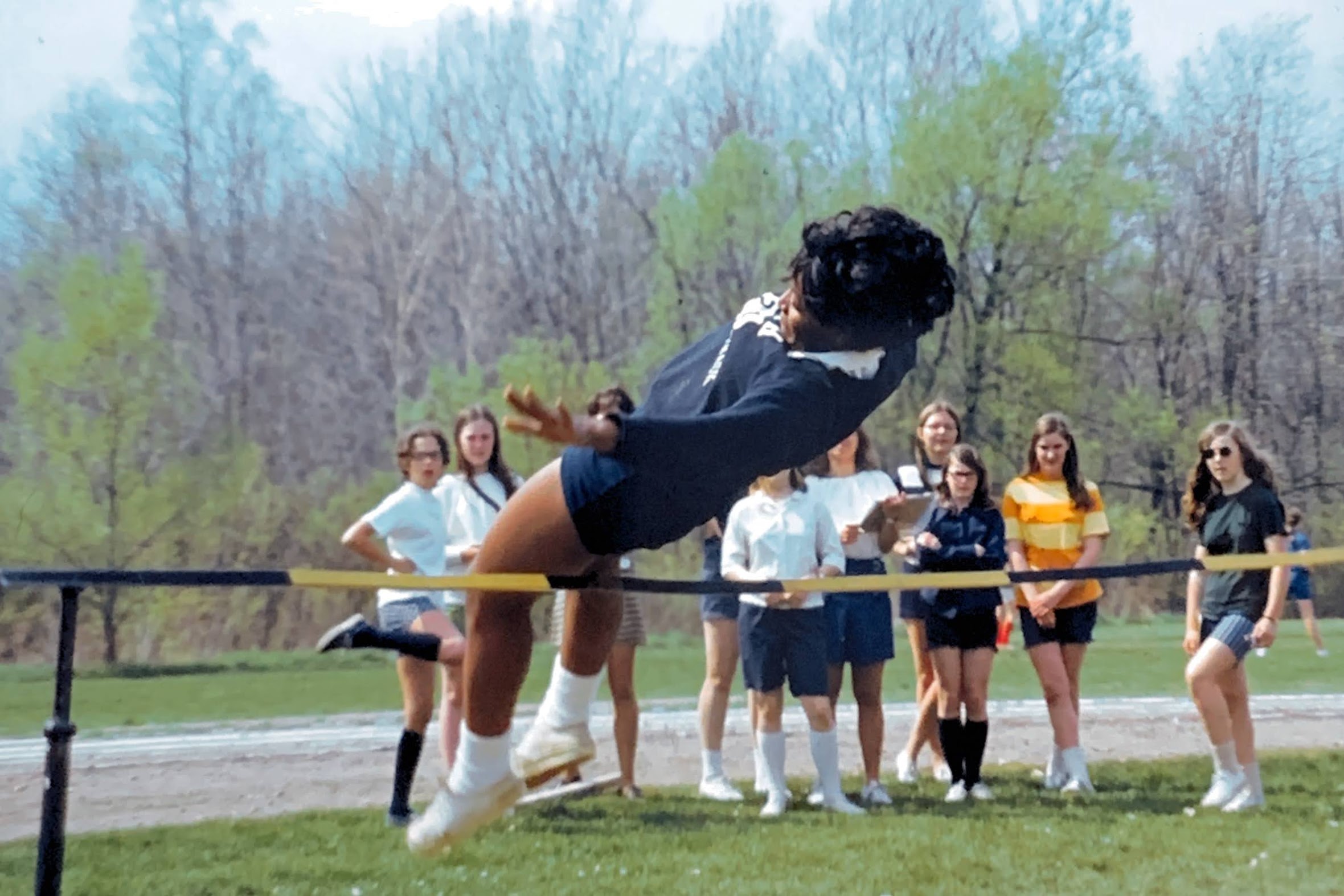
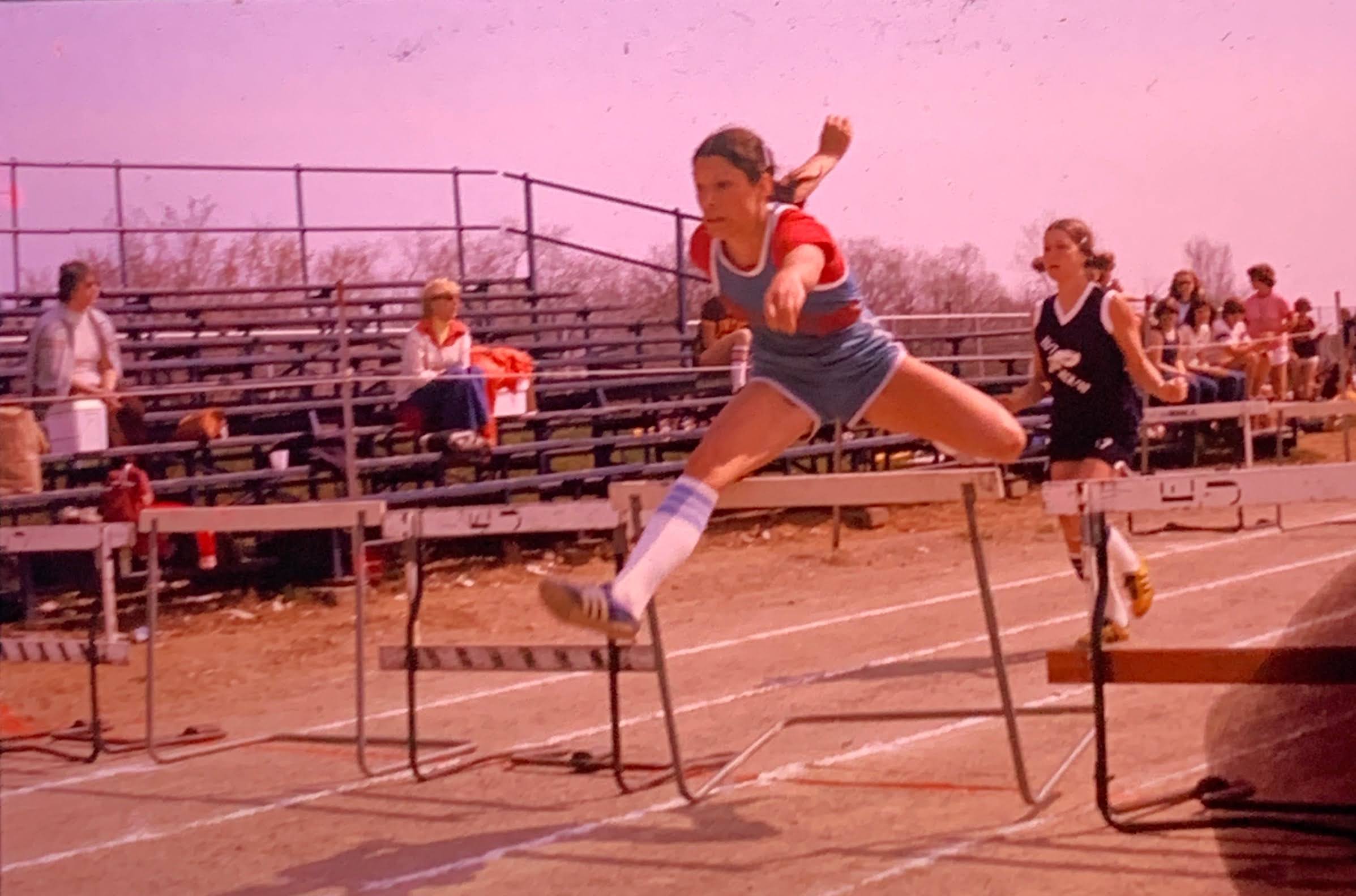
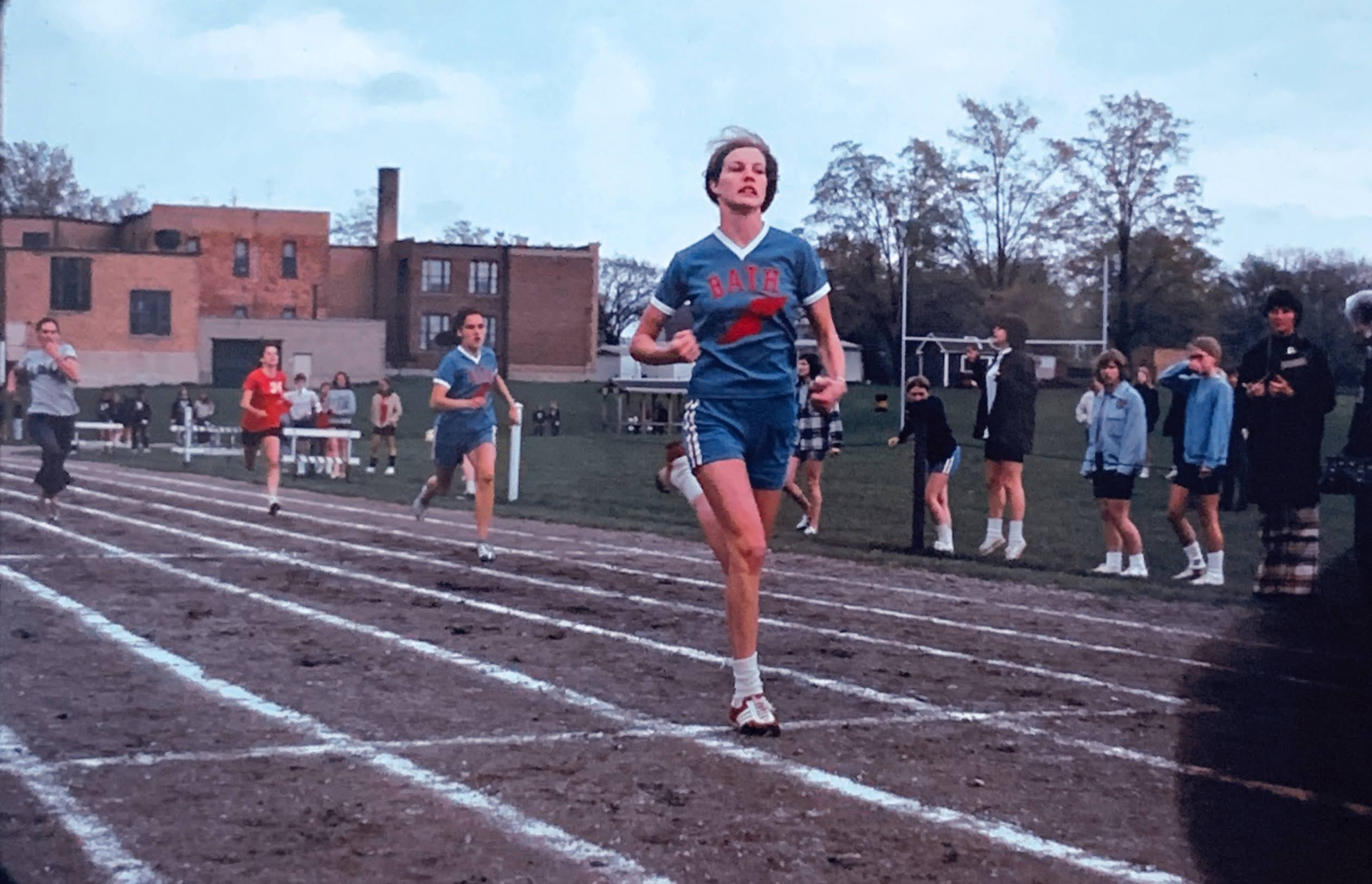
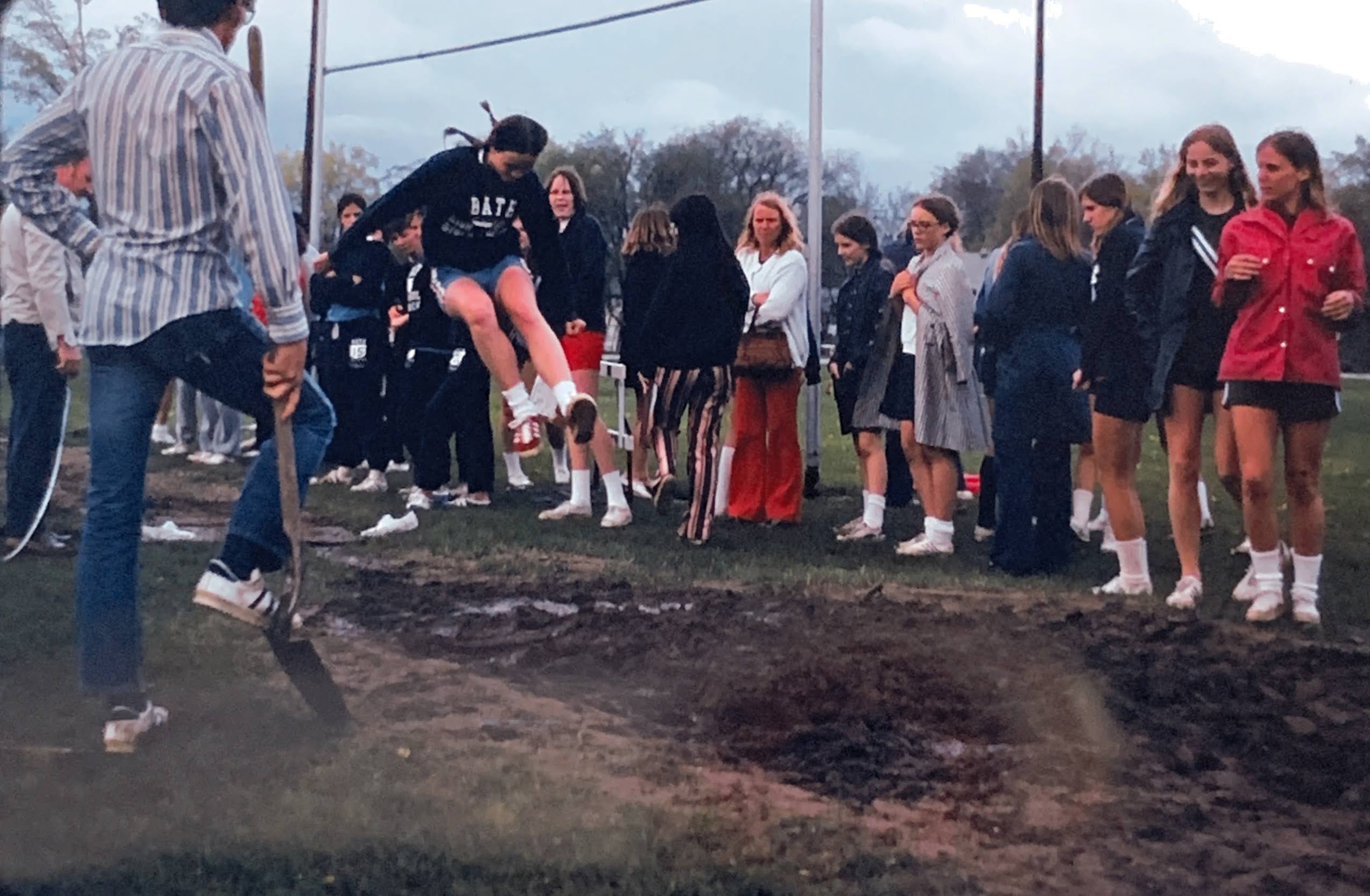
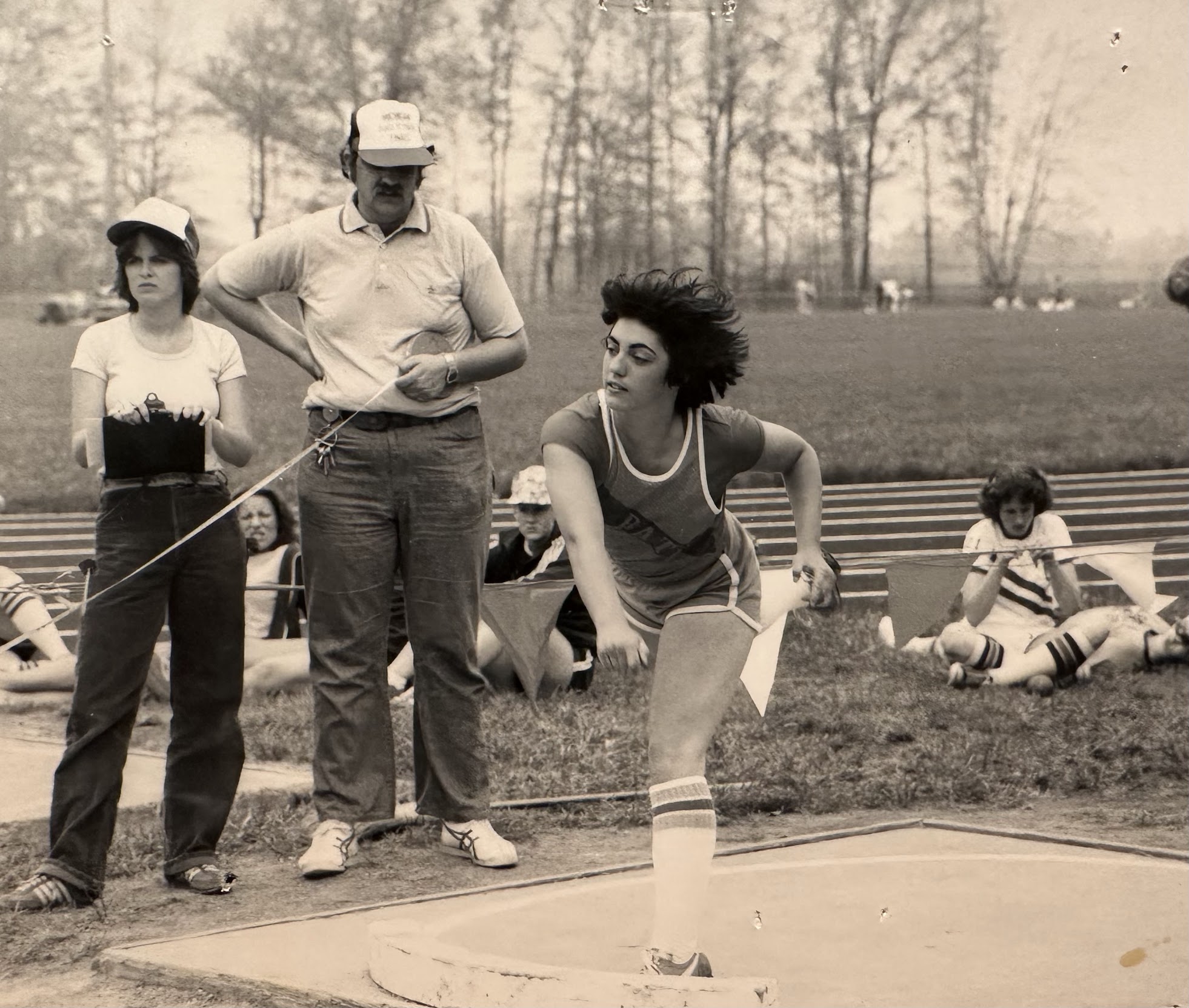
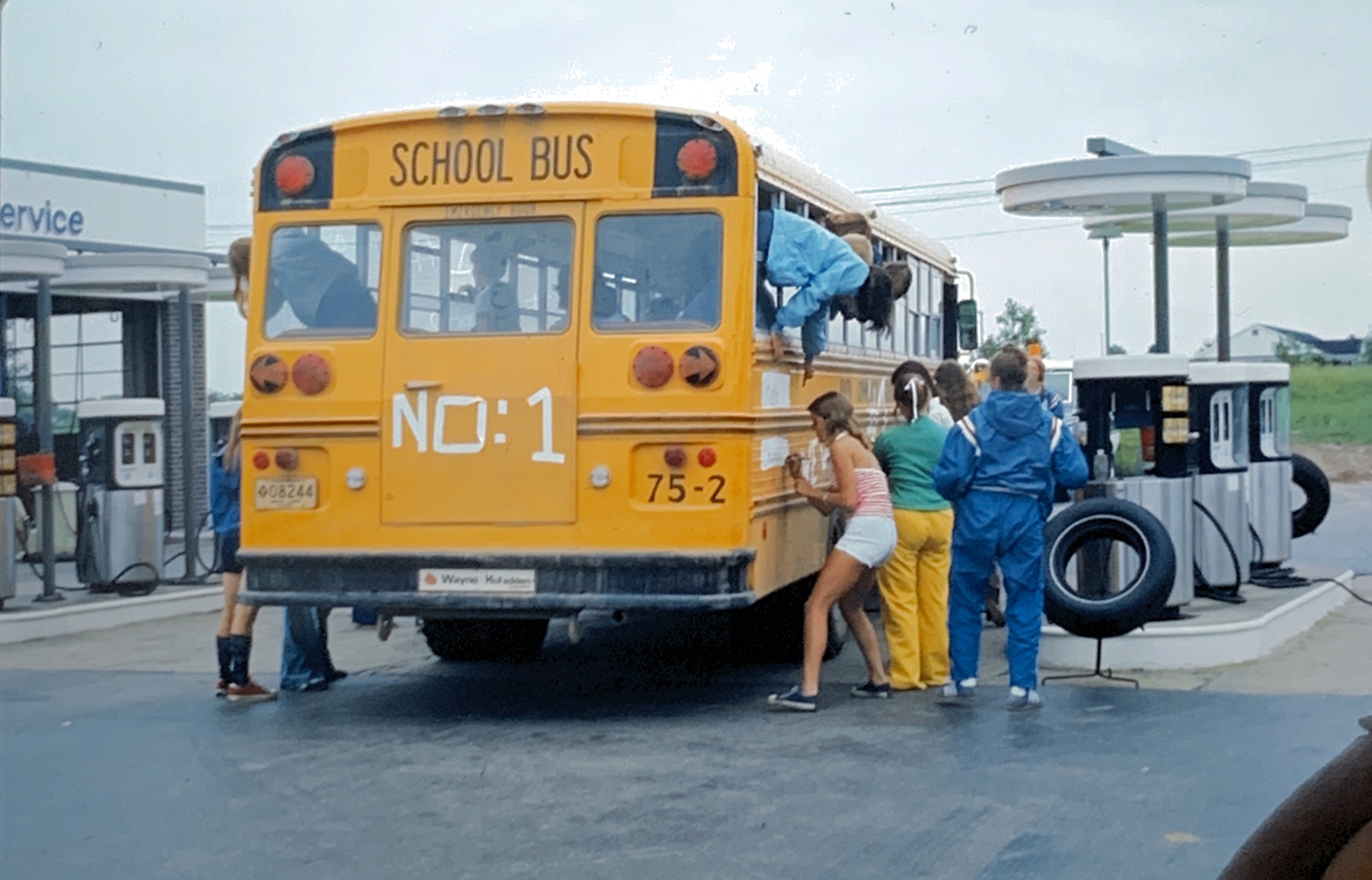
Photo credit: Nancy Roberson. Nancy mentioned when she coached, her husband took photographs of her teams.
______
GLAMoms is not involved in the Queen Bees fundraiser. This platform is only being used to share the historical background of the 1975 Bath Girls’ Track, Coach Nancy Roberson, the history of girls athletics in Bath, Michigan and the Queen Bees tradition . All tshirt sales, financial transactions, and distribution are managed solely by the Bath Elementary PTA.